

The Civil War in Onslow County: Occupation, Salt Works, and Divided Loyalties
A County Caught in the Middle
When North Carolina seceded from the Union in May 1861, Onslow County was a rural backwater of small farms, fishing villages, and pine forests. The county had relatively few enslaved people compared to the plantation regions further inland, and support for secession was not universal. But the war came to Onslow County regardless, and it left marks that took generations to fade.
Early War and Union Control
The Union Navy moved quickly to control North Carolina's coast. By early 1862, Federal forces had captured key positions along the Outer Banks and were pushing inland along the rivers and sounds. Onslow County, with its exposed coastline and navigable waterways, was difficult for the Confederacy to defend. Union gunboats patrolled the New River and Bogue Sound, effectively controlling maritime movement in the area.
The Swansboro Raid
In November 1862, Union forces conducted a raid on Swansboro, seizing supplies and disrupting Confederate activities in the area. The raid was part of a broader strategy to deny the Confederacy access to the coast and its resources. For the people of Swansboro, it was a terrifying introduction to the reality of war on their doorstep.
Confederate Salt Works
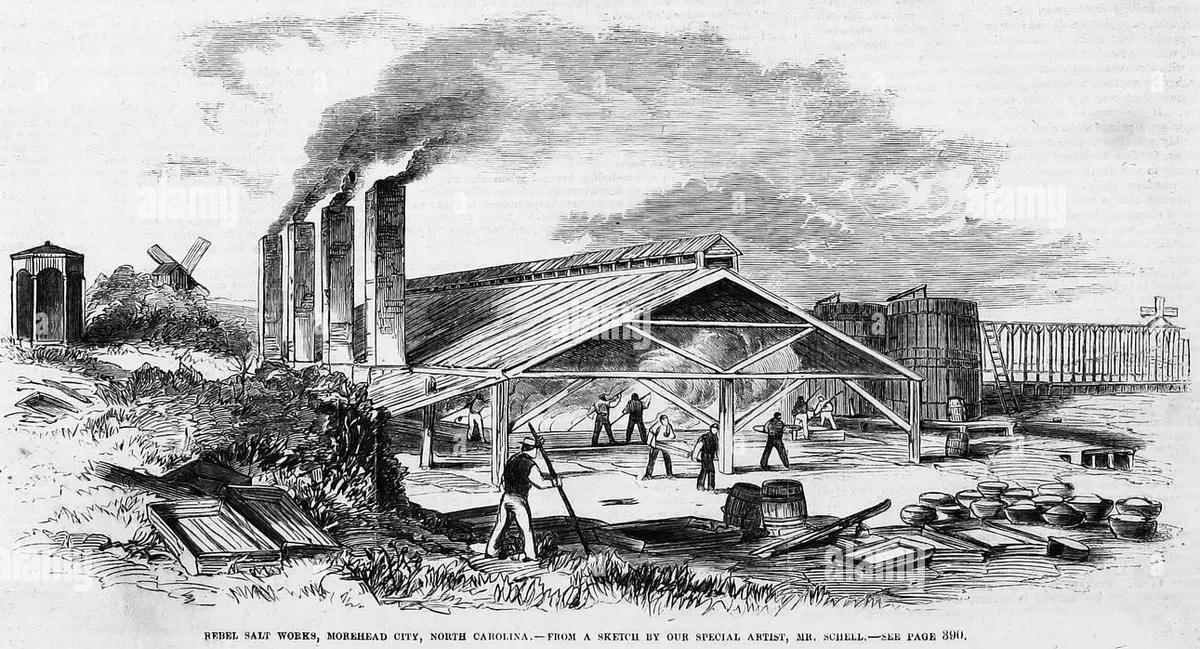
One of Onslow County's most important contributions to the Confederate war effort was its salt production. Salt was a critical strategic resource — essential for preserving food for both soldiers and civilians. As the Union blockade cut off imported salt supplies, the Confederacy turned to coastal salt works that boiled seawater to extract salt. Several salt works operated along Onslow County's coast, making the area a target for Union raids.
Divided Loyalties
Like much of eastern North Carolina, Onslow County had residents who sympathized with both sides. Some men enlisted in the Confederate army, while others resisted conscription or actively supported the Union. Desertion was common as the war dragged on, and bands of deserters and draft resisters hid in the swamps and forests of the county. The home guard and Confederate authorities clashed with these groups throughout the war.
Aftermath
The war's end in 1865 left Onslow County impoverished. Farms had been neglected, trade was disrupted, and the social order had been upended by emancipation. Reconstruction brought new challenges — political conflict, economic hardship, and the difficult process of building a new society. Recovery was slow, and the county remained one of the poorest in North Carolina for decades. It would take the military buildup of the 20th century to fundamentally change Onslow County's fortunes.