

The New River: The Ancient Waterway That Shaped Onslow County
Old River, New Name
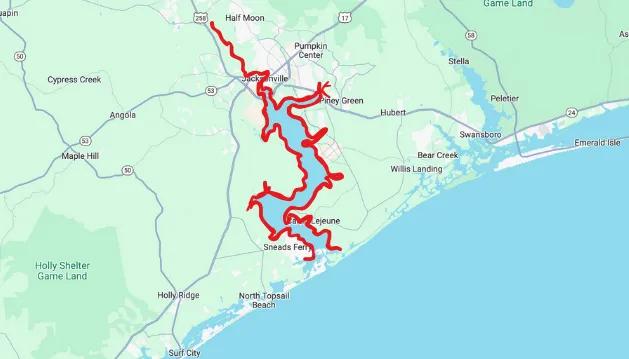
The New River, which flows through the heart of Onslow County before emptying into the Atlantic Ocean between North Topsail Beach and Sneads Ferry, has one of the most misleading names in American geography. Despite being called "new," the river and its estuary system are ancient — shaped by thousands of years of geological processes along the Carolina coastal plain.
A River of Many Uses
For the Tuscarora and other Native peoples who inhabited the region, the New River was a primary source of food and transportation. Archaeological sites along the river have yielded evidence of human habitation dating back thousands of years — shell middens, pottery fragments, and stone tools that tell the story of communities sustained by the river's bounty.
Colonial Lifeline
When European settlers arrived in the 1700s, the New River became the backbone of colonial Onslow County. Before roads were built, the river was the primary means of moving people and goods. Ferries crossed it at several points, and small boats carried timber, naval stores, and agricultural products downstream to the coast. The county's earliest settlements — including what would become Jacksonville — were located along its banks.
The River and the Railroad
The arrival of the Wilmington and Weldon Railroad in the mid-1800s reduced the river's importance as a transportation corridor, but it remained central to the local economy. Fishing, oystering, and crabbing in the New River provided livelihoods for families throughout the county. Small boatyards along the river built and repaired the vessels that worked its waters.
Military Waterway
The establishment of Camp Lejeune in 1941 transformed the New River from a civilian waterway into a military one. Large sections of the river and its tributaries fell within the base boundaries, restricting civilian access. The Marines used the river for amphibious training exercises, and it remains an integral part of Camp Lejeune's training operations today. MCAS New River, the Marine Corps air station, takes its name directly from the waterway.
Ecological Treasure
The New River estuary is one of the most ecologically significant waterways in North Carolina. Its brackish waters — where freshwater meets saltwater — support an extraordinary diversity of fish, shellfish, birds, and plant life. The surrounding marshlands serve as nursery habitat for commercially important species including shrimp, blue crabs, and flounder. Conservation efforts in recent decades have focused on protecting water quality and preserving the marshlands that make the estuary so productive.
From the canoes of the Tuscarora to the amphibious vehicles of the Marine Corps, the New River has been the constant thread running through Onslow County's story.